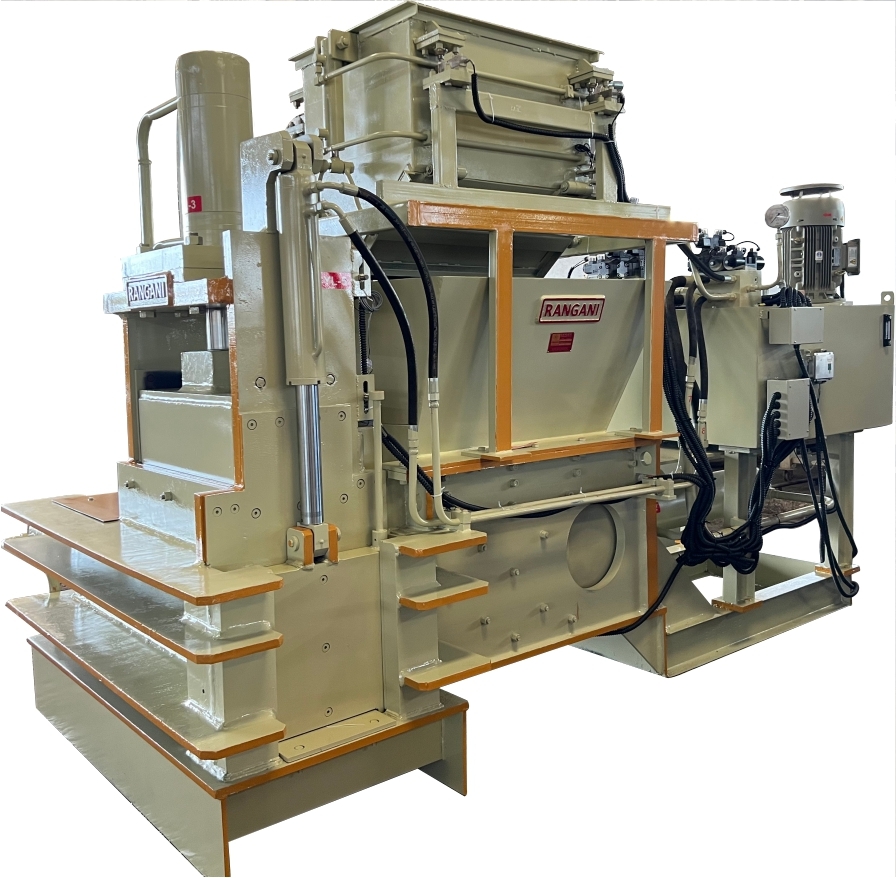
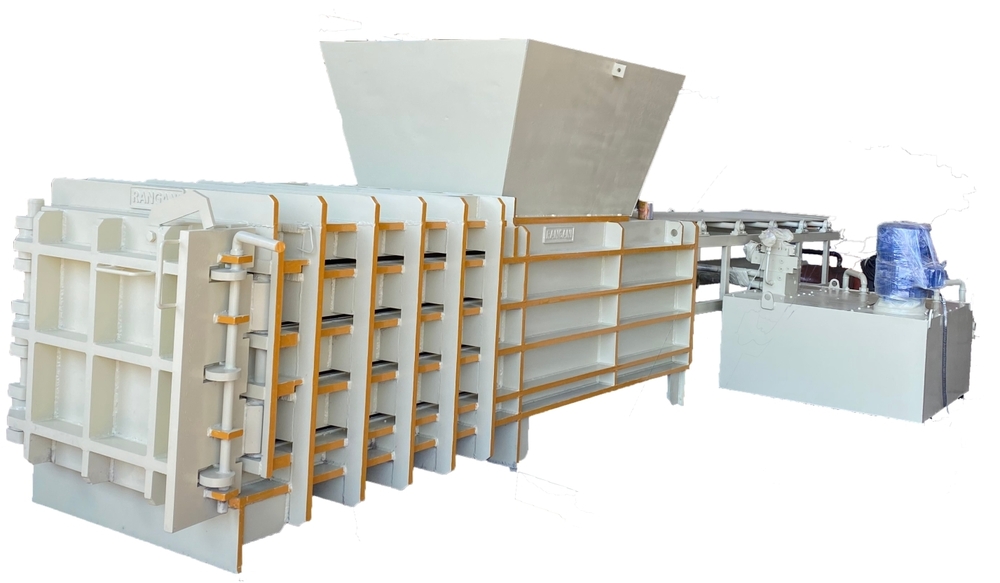
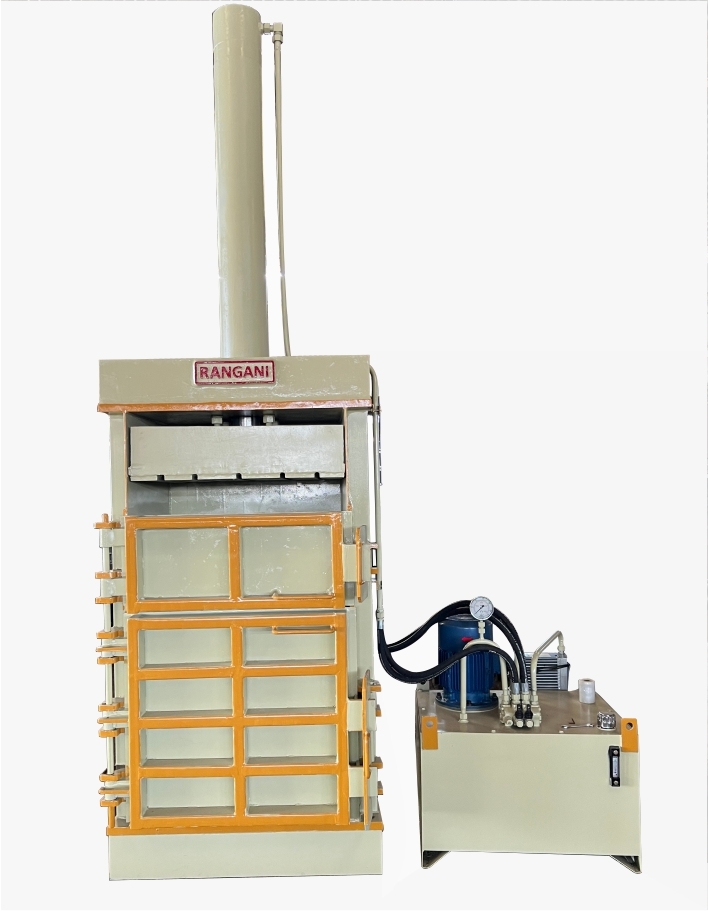
About Automatic Continuous Baling Machine
Tagline: Uninterrupted Power for High-Volume Metal Recycling
- Uninterrupted Scrap Processing
- Heavy-Duty Hydraulic Force
- Intelligent Load Management
Specifications Table
Size | Throughput / day | Bale Weight | Motor HP |
8 x 8 | 45 Tons* | 25 Kgs | 20 |
12 x 12 | 75 Tons* | 50 Kgs | 30 |
14 x 14 | 90 Tons* | 70 Kgs | 30 |
Material Suitable
- Ferrous Metals (Steel, Iron, Auto Scrap)
- Non-Ferrous Metals (Aluminum, Copper, Brass)
- Mixed Metal Shredder Residue
- Sheet Metal, Wire, and Turnings
Benefits
- Maximize Revenue
- Reduce Downtime
- Cut Labor Costs
- Space Savings
- Smart Hopper
- Energy Saving Design
Industries Served
- Scrap Metal Yards
- Automative Manufacturing and other manufacturing recycling
- Electronics and Electricals recycling plants
- Foundries and Steel Mills
Advanced Automation with PLC ControlThis baling machine is equipped with a PLC controller for precision automation, streamlining operations and minimizing manual intervention. The automatic conveyor feeding system ensures continuous material flow, enhancing productivity and reducing labor requirements for large-scale recycling or waste management facilities.
Versatile Material Handling and OutputSuited for compressing paper, cardboard, plastics, PET bottles, and textiles, the machine offers flexibility across multiple applications. Adjustable bale sizes and weights (1100 x 700 x 900 mm, 100-300 kg) optimize storage and transportation, supporting varied material types and bulk processing needs within industrial settings.
Reliability and Safety at Its CoreSafety features such as emergency stop, safety lock, and interlocking safeguard both operators and machinery. The baler's sturdy mild steel construction, combined with energy-efficient electric operation (7.5 kW), ensures reliable, low-noise performance over long hours in demanding environments.
FAQ's of Automatic Continuous Baling Machine:
Q: How does the automatic conveyor feeding system operate in this baling machine?
A: The automatic conveyor feeding system continuously delivers materials such as paper, cardboard, plastics, PET bottles, or textiles directly into the baling chamber, ensuring consistent throughput and reducing manual handling. This system increases operational efficiency and is controlled via the PLC panel.
Q: What safety measures are included in the baling machine's design?
A: The machine includes several safety features such as an emergency stop button, safety lock, and interlocking mechanisms. These are designed to protect operators by halting operation in unsafe conditions and preventing access to critical areas during active cycles.
Q: When is this baling machine ideal for use?
A: This baler is ideal for continuous, high-volume industrial waste management or recycling operations. Its rapid cycle time of 25-30 seconds per bale and capacity of 800-1500 kg/hr make it suitable for factories, recycling plants, and material exporters needing a reliable solution for compacting various recyclables.
Q: Where can this machine be installed or utilized effectively?
A: This automatic baling machine is best installed in industrial environments such as manufacturing plants, recycling centers, warehouses, or export facilities in need of efficient waste compaction and material handling solutions. Its non-portable design and heavy-duty wheels support stable placement.
Q: What is the process of forming bales with this machine?
A: Materials are automatically fed via the conveyor into the chamber (1200 x 800 x 1100 mm), where hydraulic pressure (150-180 ton) compresses them into bales. Each cycle takes 25-30 seconds, producing bales sized at 1100 x 700 x 900 mm weighing 100-300 kg, depending on the material type.
Q: How does the machine enhance efficiency and reduce operational costs?
A: By automating both material feeding and the baling process through PLC control, the machine minimizes manual labor and speeds up production cycles. Its consistent performance and energy-efficient electric operation lower operational costs, while adjustable bale sizes facilitate easier storage and transport.
 Mon-Sat 10.00 AM to 6.30 PM
 Call Us:-07313725910





 Send Inquiry


 Send Inquiry
 Send SMS
 Call Me Free


