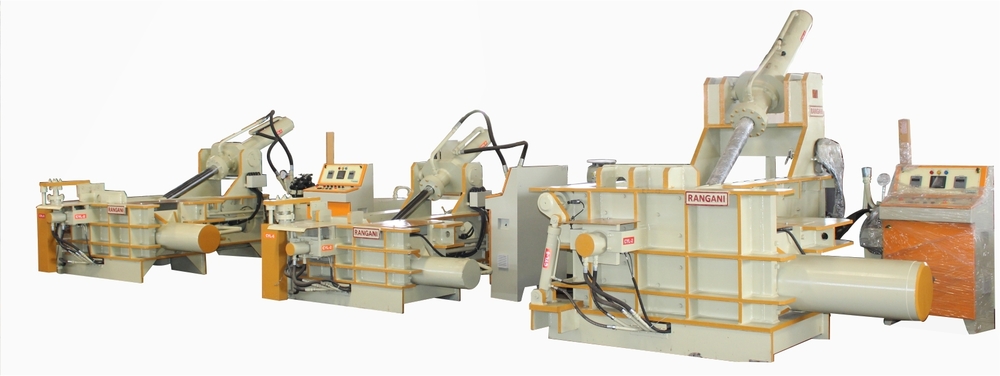
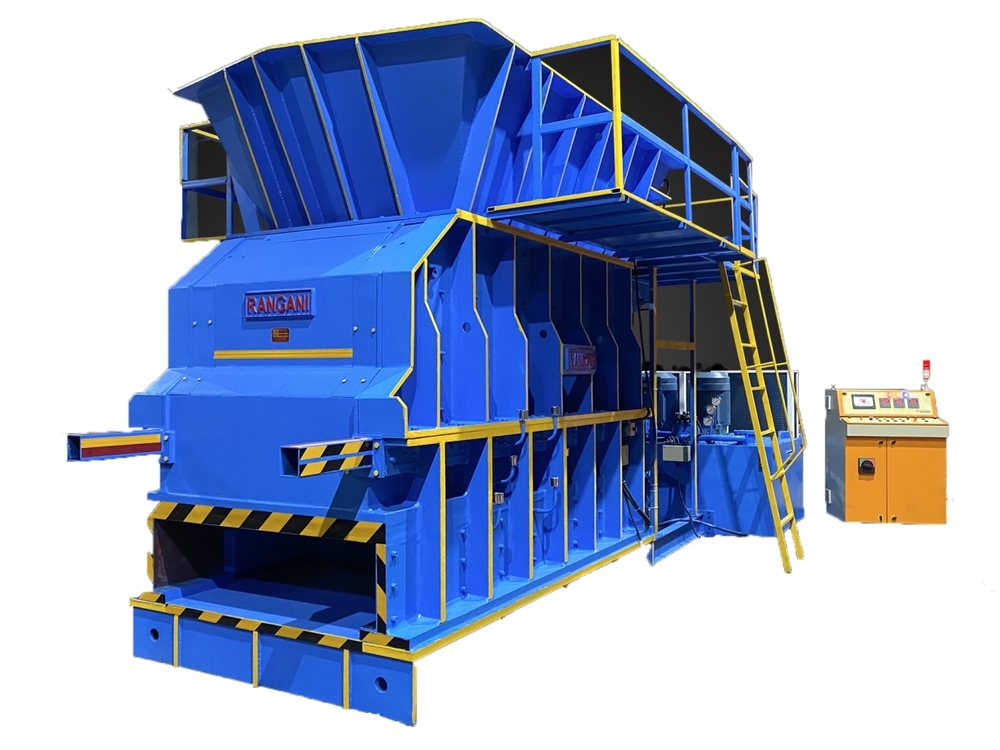
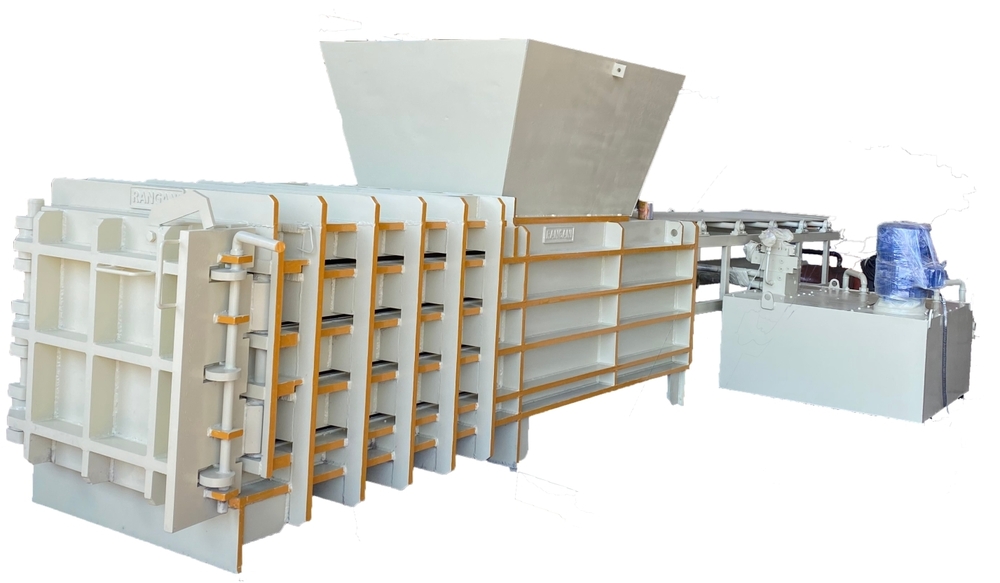
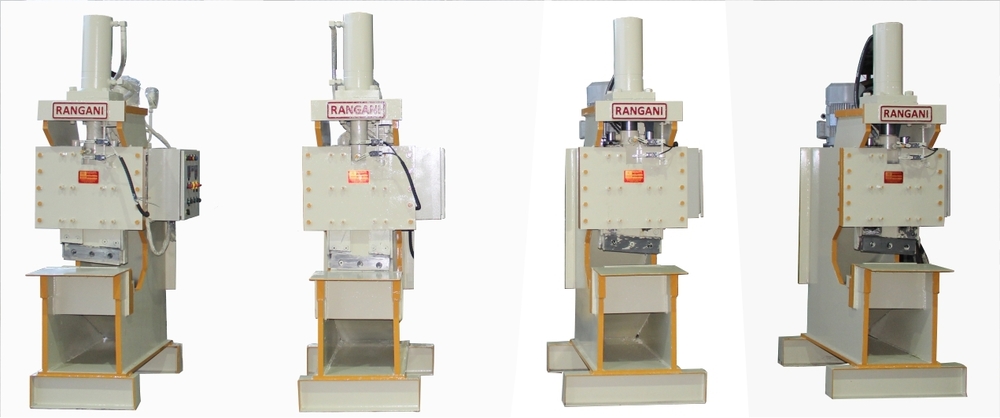
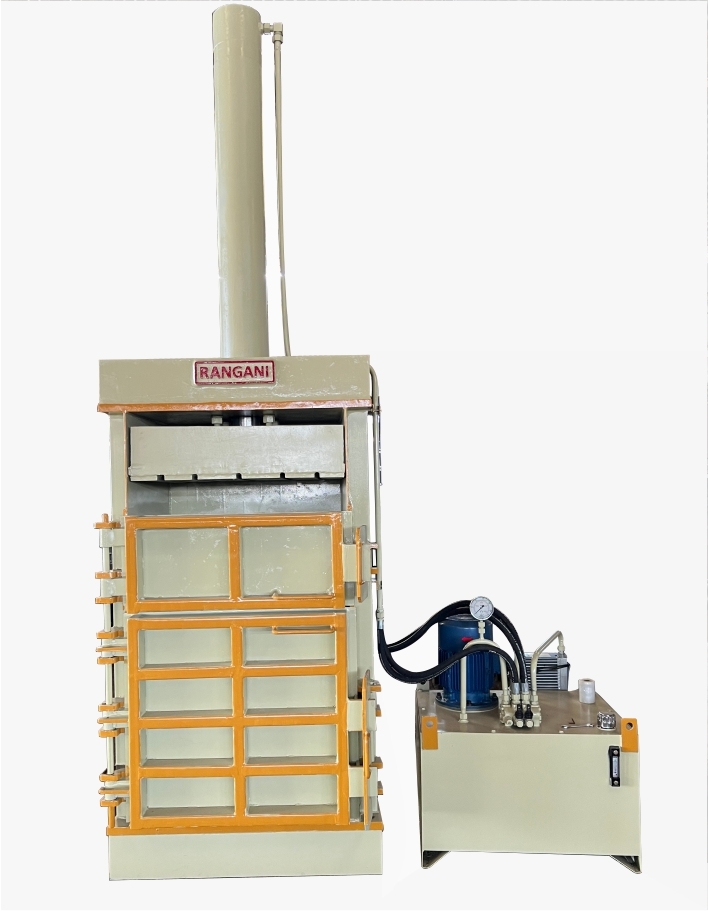
About Triple Action Scrap Baling Press
Tagline: The Ultimate Solution for Metal Scrap Management
Feature
- High Output, Lowest Horsepower
- Low Maintenance
- High Compression Density
Specifications Table
|
Size
|
Bale Weight
|
Idle Cycle Time
|
Motor HP
|
|
8" x 8"
|
25 Kg
|
45 Sec
|
20
|
|
10" x 10"
|
35 Kg
|
50 Sec
|
20
|
|
12" x 12"
|
50 Kg
|
60 Sec
|
20
|
|
14" x 14"
|
70 Kg
|
60 Sec
|
20
|
|
16" x 16"
|
125 Kg
|
80 Sec
|
30
|
Bale Weight for MS material, for others materials it may vary.
Material Suitable
- Mild Steel
- Stainless Steel
- Aluminum
- Copper
- Commercial Scrap
- Plastic / Paper
Benefits
- Higher Scrap Selling Price
- Efficient Recycling
- Lower Transportation Costs
- Minimal Space Usage
- Ease of Material Handling
Versatile ApplicationsOur Triple Action Scrap Baling Press accommodates a variety of ferrous and non-ferrous scraps, including mild steel, aluminum, copper, CRC, and stainless steel. Its customizable chamber and bale sizes make it adaptable for diverse industrial requirements, ensuring optimal performance in recycling centers, manufacturing plants, and export operations.
Advanced Automation & ControlBenefit from efficient, user-friendly operations with options for semi-automatic or fully automatic functioning. The machine features PLC or push-button control systems, allowing seamless process management and enhanced safety. This level of automation reduces manual intervention while improving throughput and consistency.
High-Efficiency Pressing MechanismThis baling press employs a triple acting method with main, side, and top rams for compact, dense bales of up to 120 kg (depending on scrap type). The double vane pump and sturdy mild steel construction ensure fast cycle times, reliable compression, and long-term durability-even in demanding, continuous-use scenarios.
FAQ's of Triple Action Scrap Baling Press:
Q: How does the triple action pressing mechanism work in this baling press?
A: The triple action baling mechanism utilizes three rams-main, side, and top-to compress scrap material from multiple directions, achieving compact, uniform bales. This process increases density and integrity, making handling, transportation, and storage more efficient.
Q: What materials can be processed with this scrap baling press?
A: The press is suitable for a wide range of scraps, including mild steel (MS), aluminum, copper, CRC, and stainless steel. Its robust design caters to various recycling and metal-processing needs, accommodating both ferrous and non-ferrous materials.
Q: When is it beneficial to opt for the fully automatic model instead of the semi-automatic one?
A: Choosing the fully automatic option is ideal for operations seeking higher efficiency, reduced manual labor, and greater safety. Automation is particularly beneficial in large-scale recycling units or continuous production environments, where consistent output and streamlined workflow are needed.
Q: Where can customized dimensions and specifications be requested for this machine?
A: As a manufacturer, supplier, and exporter based in India, we offer product customization to fit specific operational requirements. Customers can communicate their needs regarding bale and chamber sizes, colors, and automation levels for tailored solutions.
Q: What is the typical process cycle time, and how does it impact productivity?
A: The cycle time per bale ranges from 70 to 90 seconds, depending on scrap type and operational settings. Rapid cycles enable high throughput, which is crucial for heavy-duty and high-volume applications, directly increasing productivity and operational efficiency.
Q: How does the PLC control enhance the operation of this baling press?
A: The PLC (Programmable Logic Controller) system provides precise and automated control over the pressing process. It simplifies parameter adjustments, enhances safety through system interlocks, and supports seamless operation for consistent, reliable performance.
 Mon-Sat 10.00 AM to 6.30 PM
 Call Us:-07313725910





 Send Inquiry


 Send Inquiry
 Send SMS


